
Ultrasonic cleaning is an immersion washing process in which high-frequency sound waves are introduced into the cleaning bath. These waves create millions of microbubbles that implode against the surface of the part: this is cavitation. Its energy removes oils, emulsions, chips and particles, even in areas that a spray jet cannot reach.
Like any washing process, ultrasonic cleaning is explained by the Sinner circle: four factors that combine and compensate for each other.
Increasing one factor allows another to be reduced. Ultrasound provides very intense mechanical action: it shortens the cycle time, or allows a milder chemistry or a lower temperature, with the same cleaning result.
| Criterion | Spray | Simple immersion | Immersion with ultrasound |
|---|---|---|---|
| Cycle time | From about 30 s per part | Several minutes per batch | At least about 5 min per cycle |
| Volume | Series production, high volumes | Batches in baskets | Batches in baskets or in bulk |
| Part geometry | Surfaces accessible to the jet | Moderately complex shapes | Blind holes, threads, internal channels |
| Contamination | Oils, emulsions, chips | Oils and greases | Strongly adhered contamination, fine particles |
| Cleanliness requirement | Standard to high | Medium | Very high: ISO 16232, VDA 19.1, medical |
| WashTech machines | MecanoFAST, washing tunnels | PowerJet, Solvacs | PowerJet, Solvacs |
In many cases the best solution combines several technologies in the same machine: spray for pre-cleaning, ultrasound for final cleaning, and vacuum drying. Our engineers help you define the right sequence, and we can run a trial with your own parts in Mexico or France.
WashTech offers 2 families of ultrasonic washers
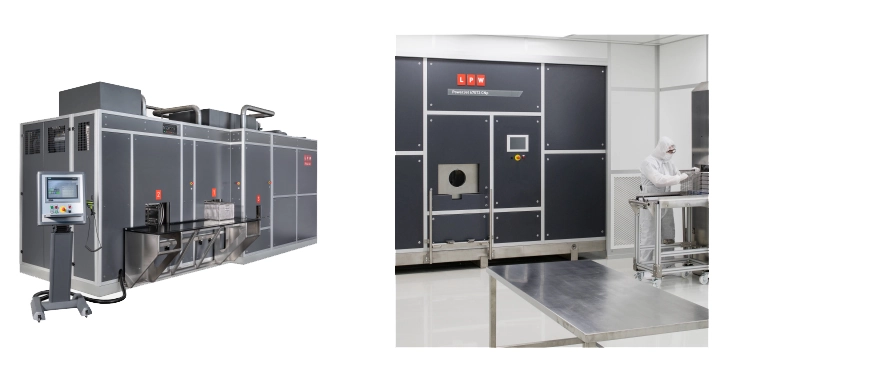
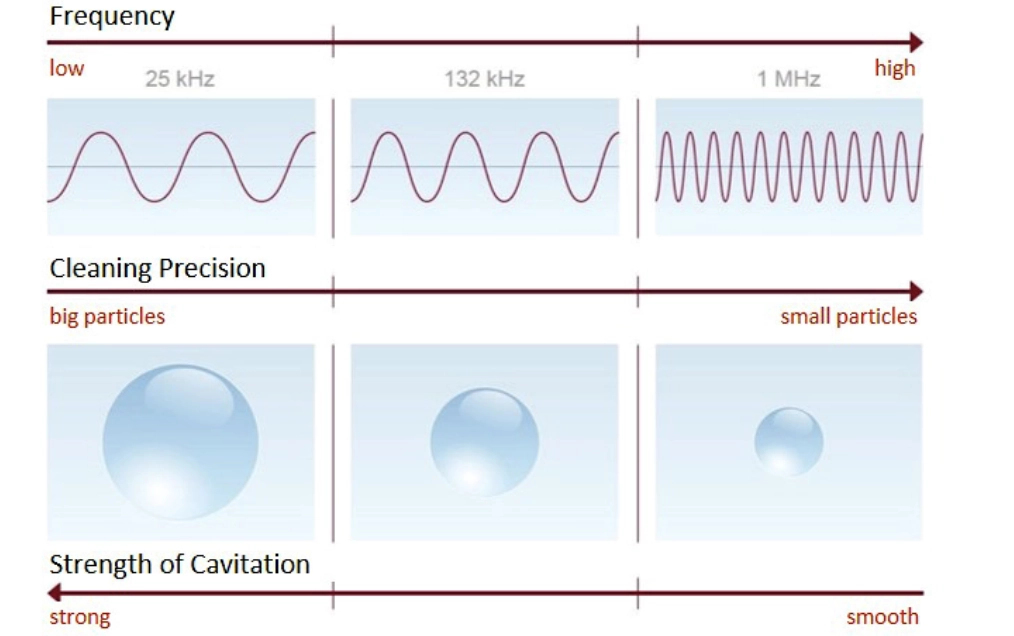
Modular machine for the most demanding cleanliness criteria: spray, simple or forced immersion, ultrasound, cyclic nucleation, hot-air or vacuum drying. Available in Twin (2 chambers) and Triple (3 chambers) versions.
Manufactured in Germany by our partner LPW Reinigungssysteme GmbH. Installation, commissioning and technical service by WashTech in Mexico.
| Standard modular system | Batch size (mm) |
|---|---|
| PowerJet 530 | 530 × 320 × 200 |
| PowerJet 670 | 670 × 480 × 300 |
| PowerJet 960 | 1 020 × 650 × 560 |
In addition to these standard systems, the PowerJet is built to order for special parts or loads.
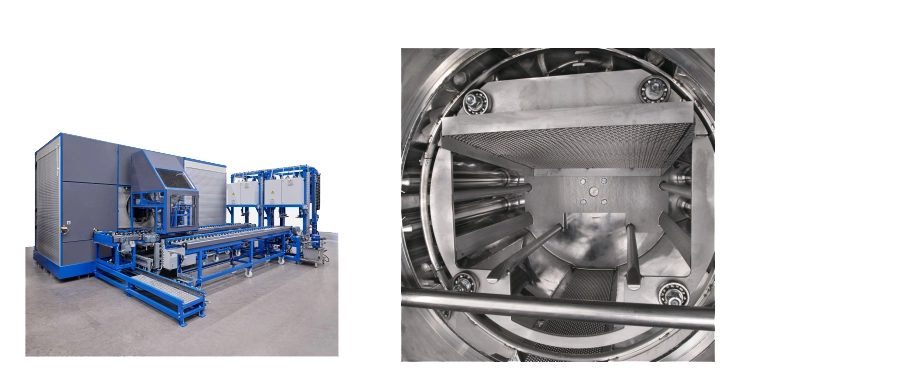
Designed for heavy organic contamination (oils, greases). Fully vacuum operation, simultaneous ultrasound and active immersion, vapor-phase degreasing and continuous solvent distillation, in a closed loop with no effluent.
Manufactured in Germany by our partner HEMO GmbH. Installation, commissioning and technical service by WashTech in Mexico.
| Model | Working chamber (mm) | Max. load |
|---|---|---|
| Solvacs 1 | 370 × 220 × 200 | 30 kg |
| Solvacs 1.5 | 480 × 320 × 200 | 50 kg |
| Solvacs 2 | 530 × 320 × 200 | 70 kg |
| Solvacs 2.5 | 600 × 400 × 300 | 100 kg |
| Solvacs 3 | 670 × 480 × 300 | 150 kg |
| Solvacs 3S | 670 × 480 × 400 | 200 kg |
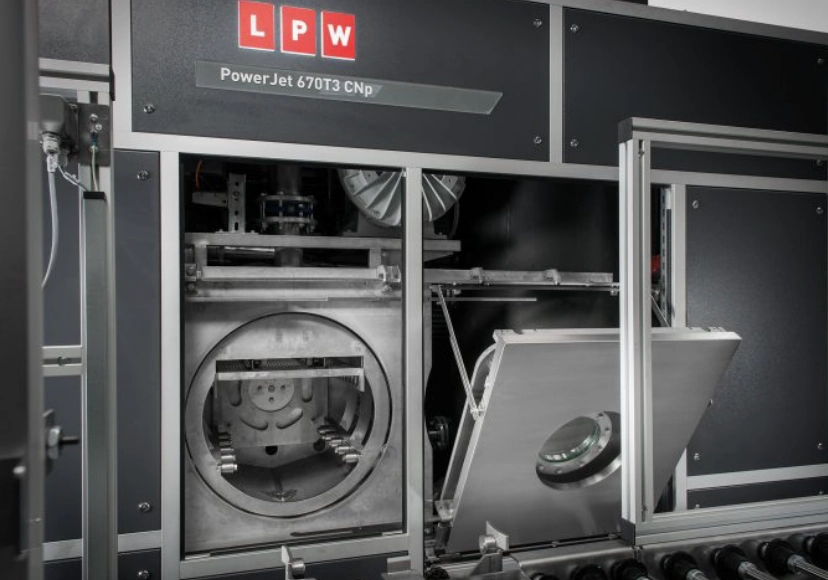
Industrial parts cleaning typically uses frequencies of 25 to 40 kHz. Lower frequencies produce more energetic cavitation, useful against strongly adhered soils; higher ones are gentler, for delicate surfaces. The frequency is chosen according to the part and the contaminant.
For most industrial parts, no, with a suitable frequency, power and cycle time. However, on very sensitive components, such as in the semiconductor or optics industry, ultrasound can damage the part. In those cases we offer the cyclic nucleation process (CNp) of the PowerJet, which cleans without ultrasound.
Water with detergent suits most machining oils and particles. Solvent (modified alcohols or hydrocarbons, with the Solvacs) is more effective against neat oils and heavy greases, and leaves the part dry and residue-free.
It is a PowerJet process that alternates pressure and vacuum phases in the chamber. Bubbles form directly inside blind holes and internal channels, and push contamination out, without ultrasound.
Yes. Ultrasound, combined with forced immersion, bath filtration and vacuum drying, achieves the strictest particle limits in the automotive industry. See our guide to ISO 16232 and VDA 19.1.
Yes. We run washing trials with your own parts in Mexico or France, to validate the technology and parameters before any investment.
Free advice from our engineers and washing trials with your own parts, in Mexico or France.
