
Solvacs machines clean with solvent in a closed vacuum chamber: immersion, solvent vapor and vacuum drying in a single automatic cycle. The solvent is distilled and recycled inside the machine.
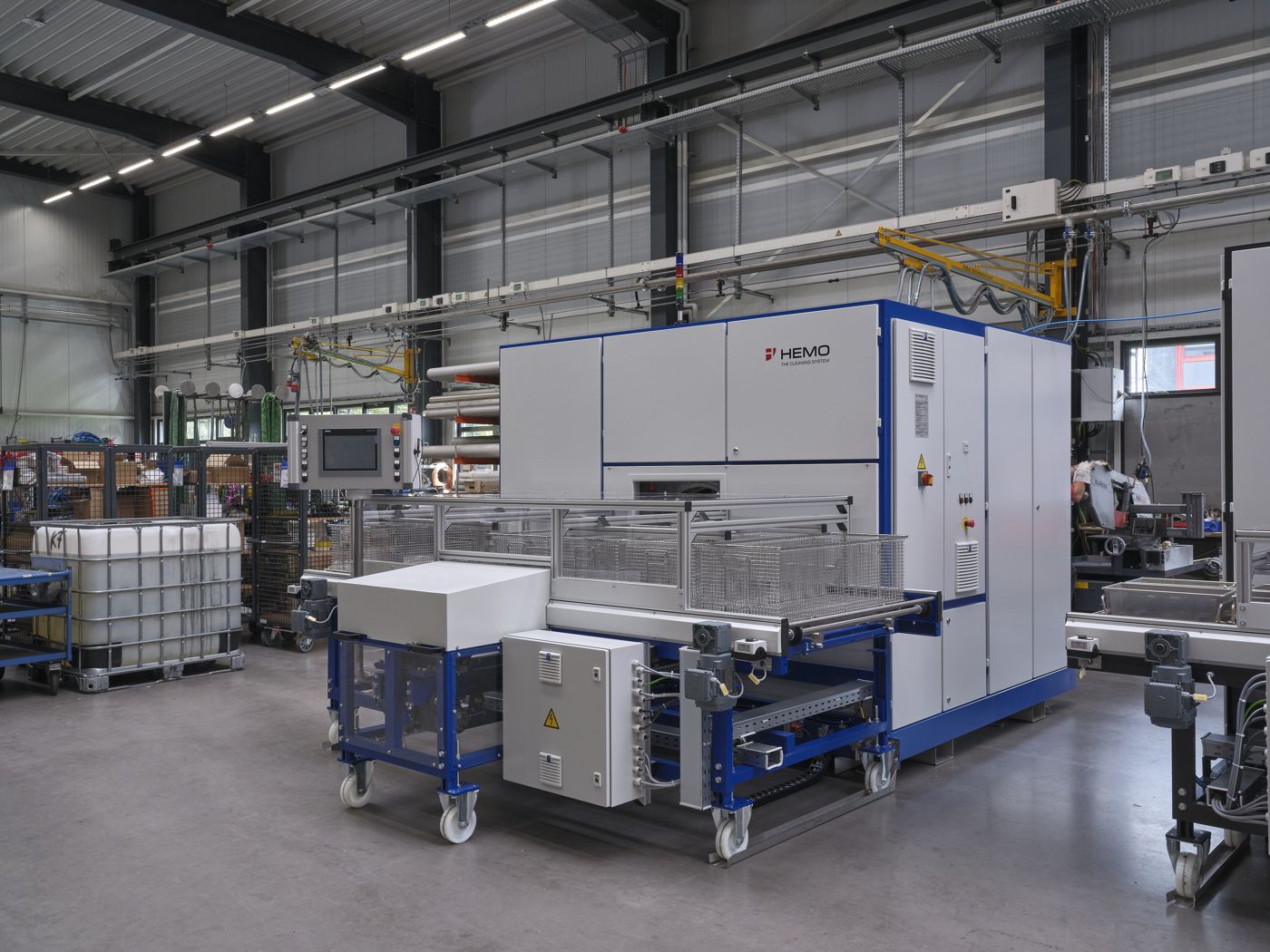
The rule of cleaning chemistry is simple: like dissolves like. Organic contaminants are removed with solvent; inorganic ones with water.
Cutting and stamping oils, greases, waxes, protective oils.
Non-polar, not water-soluble → solvent (hydrocarbons or modified alcohols)Emulsions, salts, coolant residues, fingerprints, abrasion particles.
Polar, water-soluble → aqueous cleaningEverything happens in a sealed chamber. The vacuum makes it safe to heat the solvent above its flash point, and dries the parts completely.
The solvent always circulates in a closed loop inside an enclosed machine: the operator never comes into contact with it, not even during service.
No fire risk: the vacuum is monitored with double safety, by mechanical and digital sensors, with an automatic alarm in case of failure. Complete drying: no solvent leaves the machine with the parts.
Continuous distillation and solvent recovery from the exhaust air: near-zero emissions in the workshop and very little waste.
Vapor for fast degreasing, ultrasound for technical cleanliness, hybrid process for spot-free surfaces, and corrosion protection.
| Vacuum solvent | Aqueous cleaning | Solvacs hybrid | |
|---|---|---|---|
| Oils, greases, waxes | Excellent | Good, with detergent and temperature | Excellent |
| Salts, emulsions, fingerprints | Limited | Excellent | Excellent |
| Drying | Complete, under vacuum | Hot air or vacuum, risk of spots | Complete under vacuum, spot-free |
| Complex geometries | Excellent (vacuum reaches everywhere) | Depends on geometry | Excellent |
| Effluents | None: solvent is recycled | Wastewater to treat | Rinse baths regenerated internally |
| Typical applications | Machining, stamping, tubes, aerospace | Parts with emulsions and mixed soils | Before PVD/DLC, heat treatment, technical cleanliness |
Fineblanked steel parts with oil and coolant residues. Hybrid hydrocarbon + water process: spot-free surfaces, avoiding soft spots after hardening.
HybridSpot-freeFaucets with emulsions and brass chips. Ultrasonic cleaning with solvent and water, vapor and vacuum drying: surfaces free of oil, salts and particles.
HybridUltrasoundTubes up to 30 m long with cutting oil. Immersion with ultrasound, vapor and drying: less than 20 mg/m² of residual oil.
HydrocarbonHoneycomb structures up to 4 × 1.5 × 1.5 m, ready for bonding: solvent spraying, vapor and vacuum drying.
Modified alcoholSheet metal parts with stamping oil and abrasives, in 1.25 m boxes. Perchloroethylene replaced by modified alcohol, with optional corrosion protection.
PERC replacementMachined parts with blind holes and threads: vacuum and ultrasound reach every cavity, and vacuum drying prevents any residue.
Technical cleanliness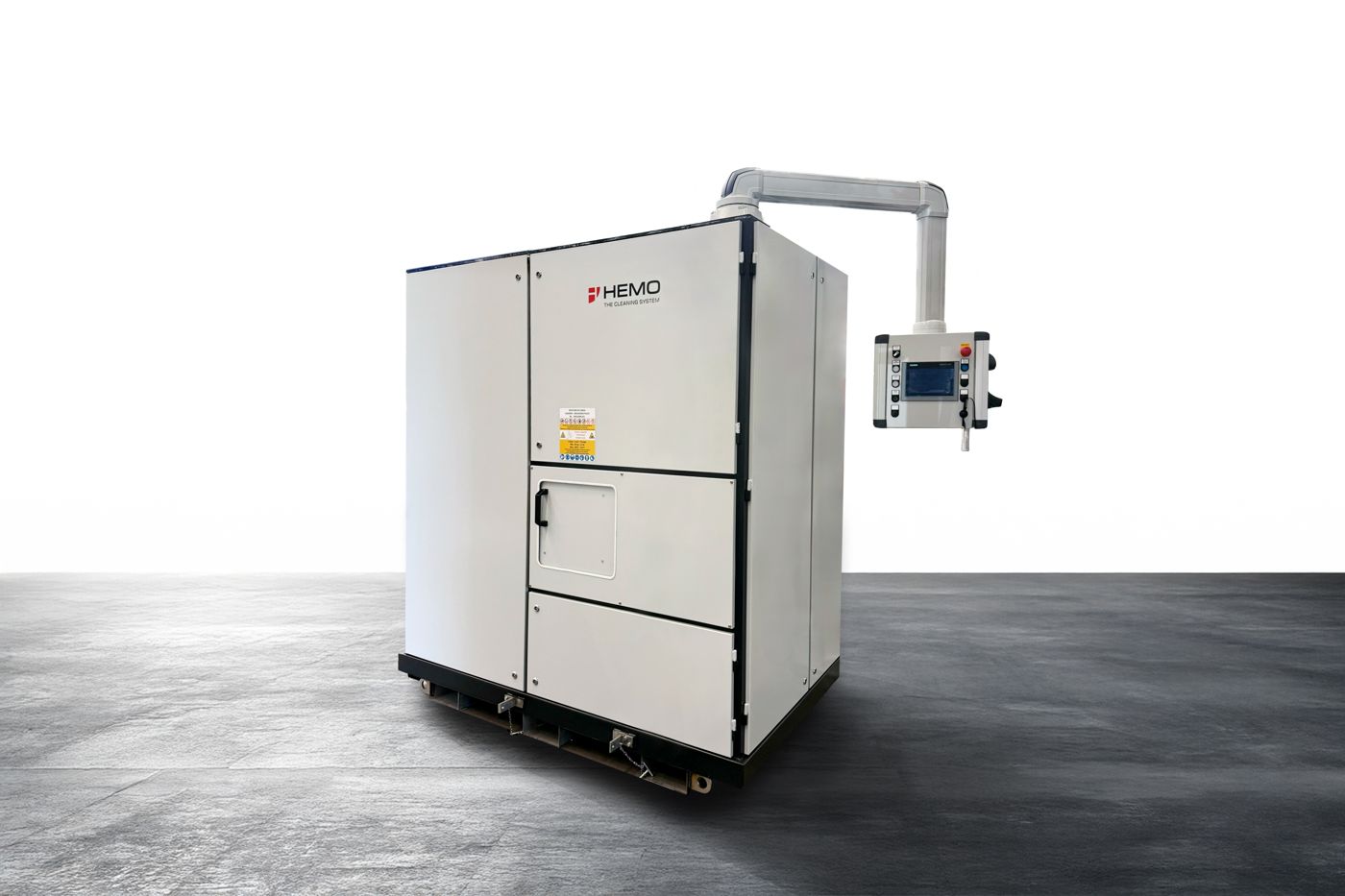
Batches from 480 × 320 × 200 mm to 600 × 400 × 300 mm, up to 10 batches per hour depending on the process. For workshops and small-part production.
Configurable machines with additional tanks, ultrasound, hybrid process and automatic conveyor loading.
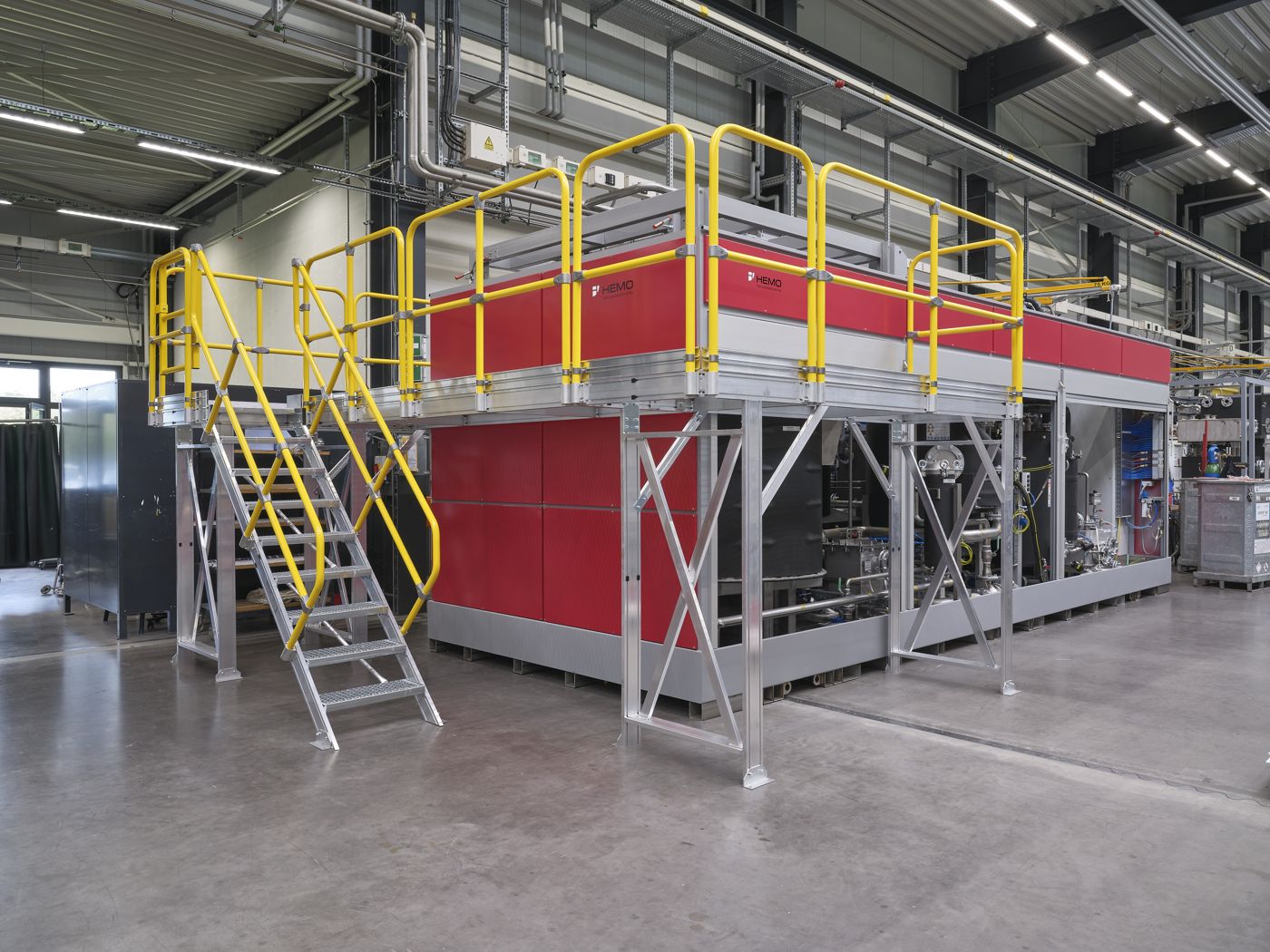
Plants for heavy loads and long parts: pallets over 1 m, tubes and structures several meters long.
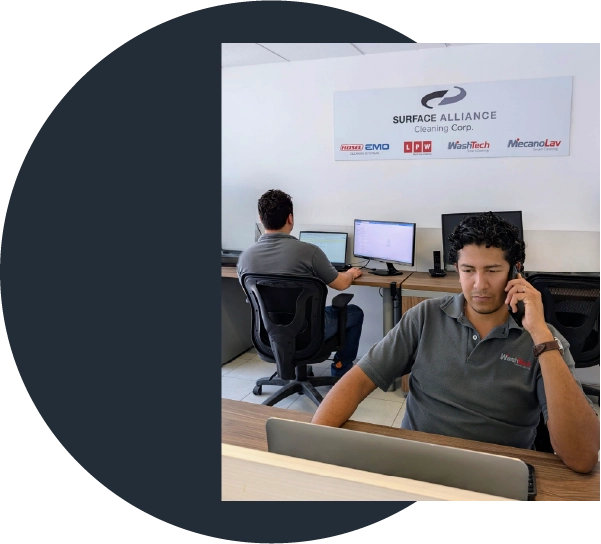
A solvent machine performs only as well as it is maintained. WashTech supports its customers throughout the life of the equipment, with a technical team in Mexico that knows HEMO technology.
When the contamination is organic and heavy (oils, greases, waxes, machining fluids), when the part cannot tolerate water, or when extreme, repeatable cleanliness is required.
Yes. The process takes place in a closed chamber under vacuum, which eliminates any fire risk. In addition, most cleaning solvents used in metalworking (modified alcohols and hydrocarbons) are not toxic.
There is no wastewater: the solvent is continuously distilled and recycled inside the machine, so cleaning is always done with pure product.
Yes. Vacuum drying evaporates the solvent completely, even in very complex geometries.
It combines solvent (high degreasing efficiency) with aqueous cleaning (removal of salts, oxides and combustion residues). Solvacs is available in a hybrid version to reach extreme cleanliness levels.
Yes. WashTech maintains solvent cleaning equipment from HEMO, NGCT, SAMT and other brands, with preventive contracts and corrective service throughout Mexico. See our maintenance service.
Free advice from our engineers and washing trials with your own parts, in Mexico or France.
